
Rib, ear or septal cartilage, or an implant: the material placed in your nose sets the cost, the operating time and how a revision would go later. Choosing rhinoplasty in Korea starts with a surgeon who explains why one material suits your nose. At ENTER Plastic Surgery in Seoul, Dr. Jang Jin-woo, a Korean board-certified plastic surgeon, operates, and the price list is priced by approach and material.
How to choose
Eight things to settle with a rhinoplasty surgeon
Rhinoplasty quotes from Seoul can look similar and describe different operations. Send a front, side and base view of your nose, and ask every surgeon the same points.
Open or closed approach
The open approach adds a short cut across the columella, the strip between the nostrils, and gives a direct view of the tip. Ask which one your plan uses and why.
Which material, from where
Ask whether the bridge will be built with an implant or cartilage, and whether cartilage comes from the ear, the septum, a donor bank or your own rib.
Skin thickness
Thick skin over the tip limits how sharp a result can look. Ask how your skin changes the plan.
Tip and nostril work
Alar reduction narrows the nostril base and is priced as its own item. Ask whether it is needed and whether the cut is inside, outside or both.
Add-ons
Hump reduction and bulbous-tip refinement are added to a rhinoplasty, not booked alone. Ask which add-ons are in your quote.
Who operates
Ask for the name of the surgeon in the operating room, not just at the consultation.
Anesthesia
IV sedation is used here, with general anesthesia also listed on the clinic's guide sheet. Ask which one applies to you.
Revision plan
Ask what happens if the bridge shifts or the result needs adjusting, and what you would need for a second operation.
Clinic types
Best Rhinoplasty in Seoul: Four Settings, Four Sets of Questions
Nose surgery in Seoul is offered by very different practices. The question is how each one handles planning, materials and follow-up for someone flying in.
| Setting | What to expect | Question to ask |
|---|---|---|
| Plastic surgery clinic with nose surgery on its menu | The operating surgeon plans approach and material at consultation | Will you show me where each graft or implant sits on my photos? |
| Hospital with a dedicated nose team | Several surgeons; complex rib and revision cases | Which surgeon operates, and who sees me at follow-up? |
| Clinic selling non-surgical nose shaping | Filler or thread work in place of surgery | When would surgery be the better match for my bridge? |
| Agency for overseas patients | Package dates, hotel and transfers | Does the quote list approach, material, add-ons and sedation apart? |
Whichever setting you choose, the written plan should name the approach, the material and its source, each add-on and the splint-removal day.
Prices
Rhinoplasty cost in South Korea, by approach and material
Each card pairs one approach with one material, which is why the range from the simplest closed plan to an open plan with rib cartilage from your chest is wide. Nostril narrowing has its own cards. The hump and tip cards can be added to a nose operation but are not booked alone. IV sedation sits on its own line beside the surgery fee.
Every card is excluding VAT (10% VAT is added at payment). Ask for prescribed medication and any aftercare items to be written into the quote, along with the deposit and cancellation terms, before you pay.
Prices exclude VAT (10% VAT is added at payment).
Your doctor
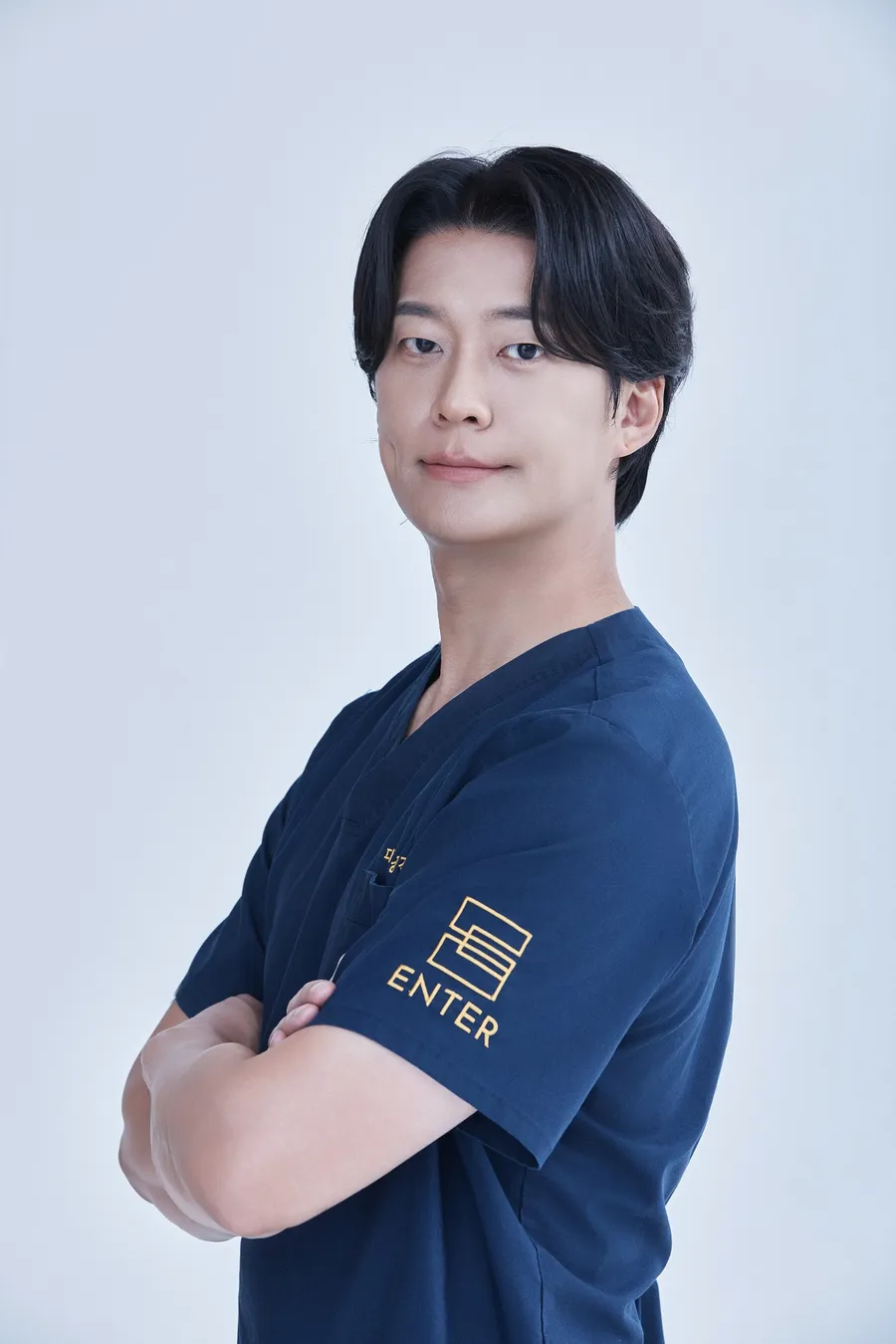
Chief Director · Korean board-certified plastic surgeon
“Natural, yet clearly visible change.”Eyelid and facelift surgery at ENTER is planned and performed by Dr. Jang himself.
- NowChief Director, ENTER Plastic Surgery
- TrainingPlastic surgery, Kyung Hee University Medical Center
- FormerChief Director, Jang Plastic Surgery
- FormerDirector, Secret Plastic Surgery
- MemberKSPRS · KSAPS · ISAPS · ESOPRS · ASPS
Materials
Implant, ear, septal and rib cartilage: what each one changes
According to the clinic's nose surgery guide, the implant used to build up the bridge is silicone, and cartilage supports and shapes the tip. Each material has its own trade-offs.
| Material | Where it comes from | Used for | Listed operating time |
|---|---|---|---|
| Implant (basic plan) | Manufactured | Raising the bridge | About 2 hours |
| Ear cartilage | The bowl of your ear | Tip support and shape | About 2 hours |
| Septal cartilage | The partition inside your nose | Tip support and lengthening | About 2.5 hours |
| Donor rib cartilage | A tissue bank | Larger frameworks without a chest cut | About 2.5 hours |
| Your own rib cartilage | Your chest | Larger frameworks and revisions | About 3.5 hours |
Times come from the clinic's price list and vary with the plan. The table describes uses, not a ranking of materials.
Your stay
The rhinoplasty week in Seoul and the months after
The clinic's aftercare sheet for nose surgery sets out the following. Daily activities can resume straight away.
| When | Guidance |
|---|---|
| Days 1–2 | A little bleeding from the nostrils is expected |
| Days 1–3 | Cold compresses, then warm ones from day 4 |
| Each day | Prescribed medication morning and evening |
| About day 7 | Splint and stitches removed; flying home after this |
| First two weeks | No hard nose blowing; just wipe away a runny nose |
| First four weeks | No glasses or sunglasses resting on the bridge |
| Months 2–3 | Follow-up visit to check the shape |
Fever or pain that does not ease means contacting the clinic straight away. General advice after rhinoplasty is daily light walking and no strenuous exercise for two to three weeks; your surgeon's instructions take priority.
Evidence
What rhinoplasty research reports on satisfaction and complications
A meta-analysis of observational studies found that satisfaction rose after rhinoplasty, with a larger gain in younger patients, though results varied enormously between studies (Yang, 2018).
Revision is where the picture changes. In 102 primary and revision operations by one surgeon, revision patients were more often dissatisfied, and some of their problems may have begun with the first operation; 60% answered the survey (Suresh, 2021). For implants, a 15-year series of 548 Asian patients with a custom silicone implant reported 94.9% satisfaction and early complications in 6.5%, with an average follow-up of six months (Lohsiriwat, 2013).
Complications worth naming before you book:
- Implant shifting or a bridge that looks crooked
- Implant extrusion through the skin
- Bleeding under the skin (hematoma)
- Infection, which can mean removing an implant
- Breathing changes after septal or tip work
At ENTER
Rhinoplasty planning with ENTER Plastic Surgery
ENTER Plastic Surgery prices every approach and material on its list, which makes a written quote straightforward to check line by line. Dr. Jang Jin-woo performs the surgery and is a member of KSPRS, the Korean Society of Plastic and Reconstructive Surgeons.
The shape check at two to three months is part of the plan, so overseas patients can decide early whether that means a second trip. To start, send front, side and base photos of your nose in daylight, using WhatsApp or the consultation form. English-speaking staff are available at the clinic, and someone will reply as soon as possible.
Evidence
Research behind this page
- Primary and Revision Rhinoplasty: A Single Surgeon Experience and Patient SatisfactionPlastic and Reconstructive Surgery - Global Open · 2021 · Suresh R et al. · doi:10.1097/gox.0000000000003798
In one surgeon's 102 primary and revision rhinoplasties, revision patients were more often dissatisfied; the survey response rate was 60%.
- Evaluation of Preoperative and Postoperative Patient Satisfaction and Quality of Life in Patients Undergoing Rhinoplasty: A Systematic Review and Meta-AnalysisPlastic & Reconstructive Surgery · 2018 · Yang F et al. · doi:10.1097/prs.0000000000004102
A meta-analysis of observational studies found satisfaction improved after rhinoplasty, more in younger patients, with very high heterogeneity.
- Augmentation rhinoplasty with custom-made S-shape silicone implant in Asians: A 15-year experienceIndian Journal of Plastic Surgery · 2013 · Lohsiriwat V · doi:10.4103/0970-0358.122004
A 15-year single-surgeon series of 548 Asian patients with a custom silicone implant reported 94.9% satisfaction and 6.5% early complications, with six months' mean follow-up.
FAQ
Rhinoplasty in Korea: what people ask before choosing
What should a rhinoplasty surgeon in Korea show me before I book?
A written plan naming the approach, the material and where it comes from, each add-on and the anesthesia. A careful surgeon also explains how your skin thickness affects the tip, names who operates and says what a revision would involve if one were needed.
Why do rhinoplasty prices in Korea vary so much between plans?
Because approach and material change the operation. At this clinic a closed plan with ear cartilage is ₩3,300,000 while an open operation using cartilage from your own rib is ₩10,000,000, both excluding VAT (10% VAT is added at payment).
Is revision rhinoplasty harder than a first operation?
It can be. In one surgeon's series of primary and revision cases, revision patients were less often satisfied, and some problems may have started with the first surgery. Scar tissue and missing cartilage can mean rib grafts and a longer operation.
Can I fly home a week after rhinoplasty?
Yes, once the splint is off. Splint and stitch removal falls at about day seven, and that visit is the point the clinic gives for flying. A shape check follows at two to three months, so plan for it before you leave.
How common are problems with a silicone nose implant?
In a 15-year series of 548 Asian patients, early complications were 6.5%, mostly implant shifting, with extrusion, hematoma and infection each under 1%. Follow-up averaged six months, so late problems are less well captured.
Is general anaesthesia (UK spelling) used for rhinoplasty at ENTER Plastic Surgery?
IV sedation is what the clinic plans for nose surgery, and its guide sheet also lists general anesthesia. IV sedation is ₩300,000 excluding VAT, as a separate line; check how your written quote lists the anesthesia that applies to you.
When can I exercise or wear glasses after rhinoplasty?
Glasses and sunglasses stay off the bridge for four weeks, according to the clinic's aftercare. General advice is light walking every day, no strenuous exercise for two to three weeks and around three months before contact sports.
Google reviews
Reviews on Google Maps
Great experience! Dr. is very sweet and kind. He listened to what I wanted to fix and correct. He explained everything very well. Wasn’t pushy and didn’t try to sell anything extra. This isn’t a clinic that comes out on instagram, which I…
 Jennifer LyuA month ago
I came to Enter Plastic Surgery on a friend’s recommendation for under-eye fat repositioning. I was pretty nervous going in, but the doctor took the time to explain what would work for my under-eyes, what the procedure involved, and what…
 Michael2 months ago
The staff are incredibly friendly, and the consultation was very thorough. I was very worried since it was my first procedure, but the director explained the aftercare in detail, so I felt completely confident trusting them!!
 ROOHEUI SHIN (RHS)2 months ago · Translated by Google