

A SMAS facelift in Korea treats sagging that has slipped into the jowls, jawline and lower cheeks by lifting the superficial musculoaponeurotic system, the fibrous layer beneath the skin, before any skin is trimmed. At ENTER Plastic Surgery, Dr. Jang Jin-woo performs the full facelift under general anesthesia in three to five hours, and the outer stitches come out after about seven to ten days.
Is it for you?
Who a full SMAS facelift is planned for
Facial aging below the cheekbones is a problem of descent. Fat pads and the supporting layer slide downward, the jawline loses its edge, folds deepen beside the nose and mouth, and the neck can follow. A full facelift is planned for a face where that descent is visible across several zones at once, since lifting one area alone would leave the others behind.
Skin quality decides less than many people expect. Fine lines, sun spots and texture stay much the same after a facelift, because the operation repositions tissue and does not resurface skin. When laxity is still mild, lifting devices or threads are discussed first, and the surgery is held back until the change they can give is no longer enough. General health also matters: anything that raises bleeding risk or slows wound healing is reviewed before a date is set.
Usually a good fit
- Jowls that blur the line of the jaw
- Nasolabial folds and marionette lines deepening together
- Sagging that runs from the cheeks down toward the neck
- Threads or lifting devices no longer giving enough change
- Able to stay in Seoul for 10 to 14 days after surgery
We may suggest waiting
- Early laxity that non-surgical lifting may still address
- Fine lines or skin texture as the main concern
- Smoking that cannot be stopped around the surgery
- Uncontrolled blood pressure or a bleeding disorder
- Pregnancy or breastfeeding
Before & after
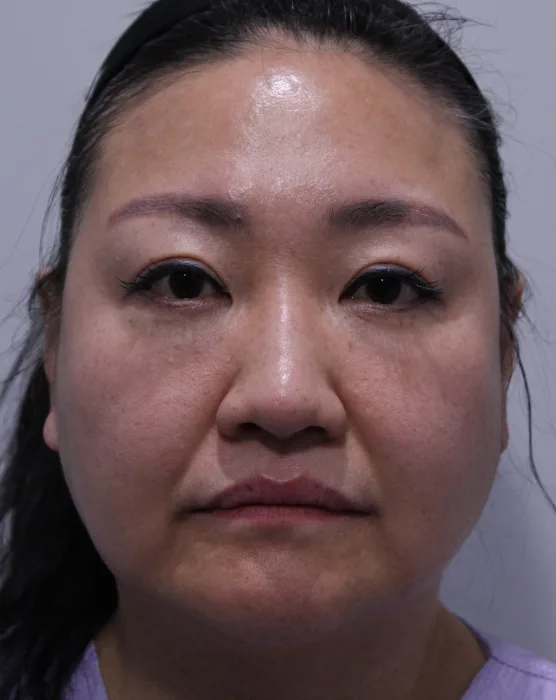
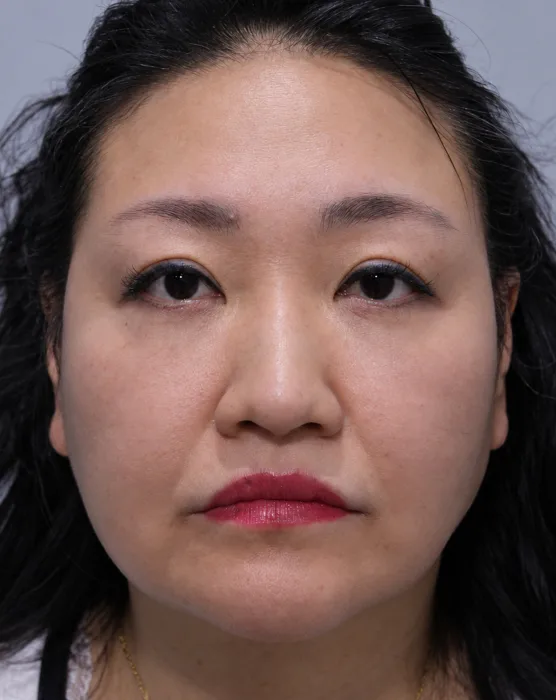
SMAS facelift before and after
 BEFORE
 AFTER
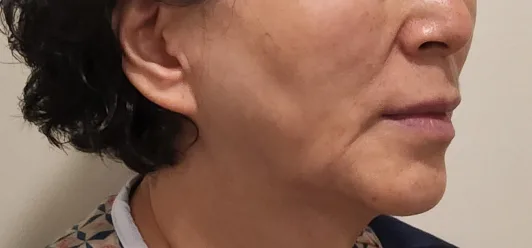 BEFORE
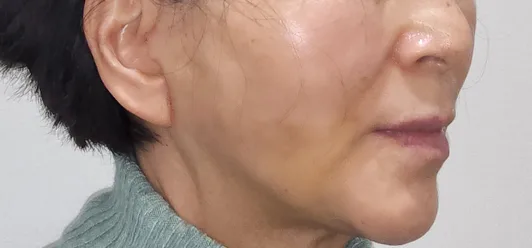 AFTER
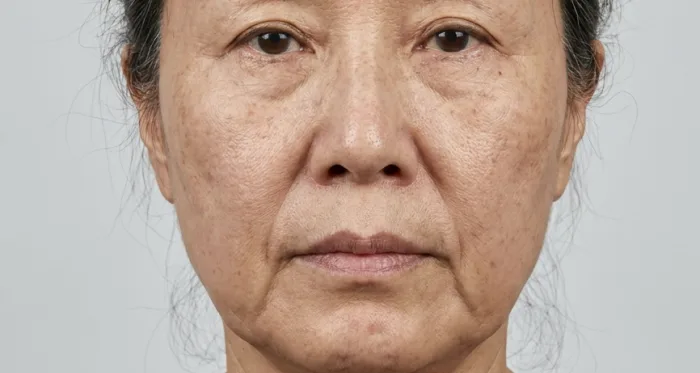 BEFORE
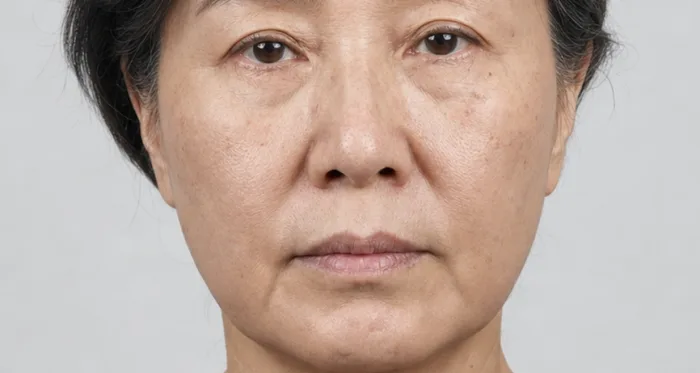 AFTER
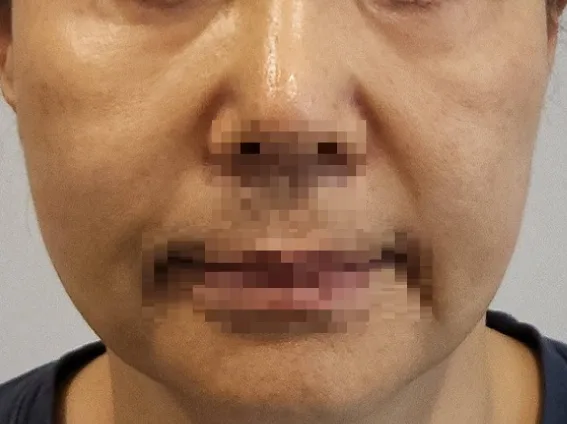 BEFORE
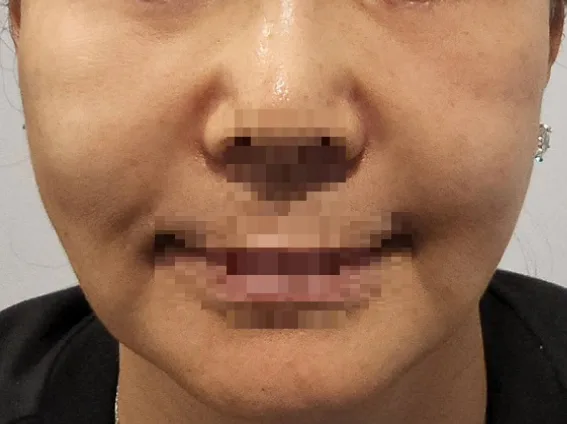 AFTER
How it works
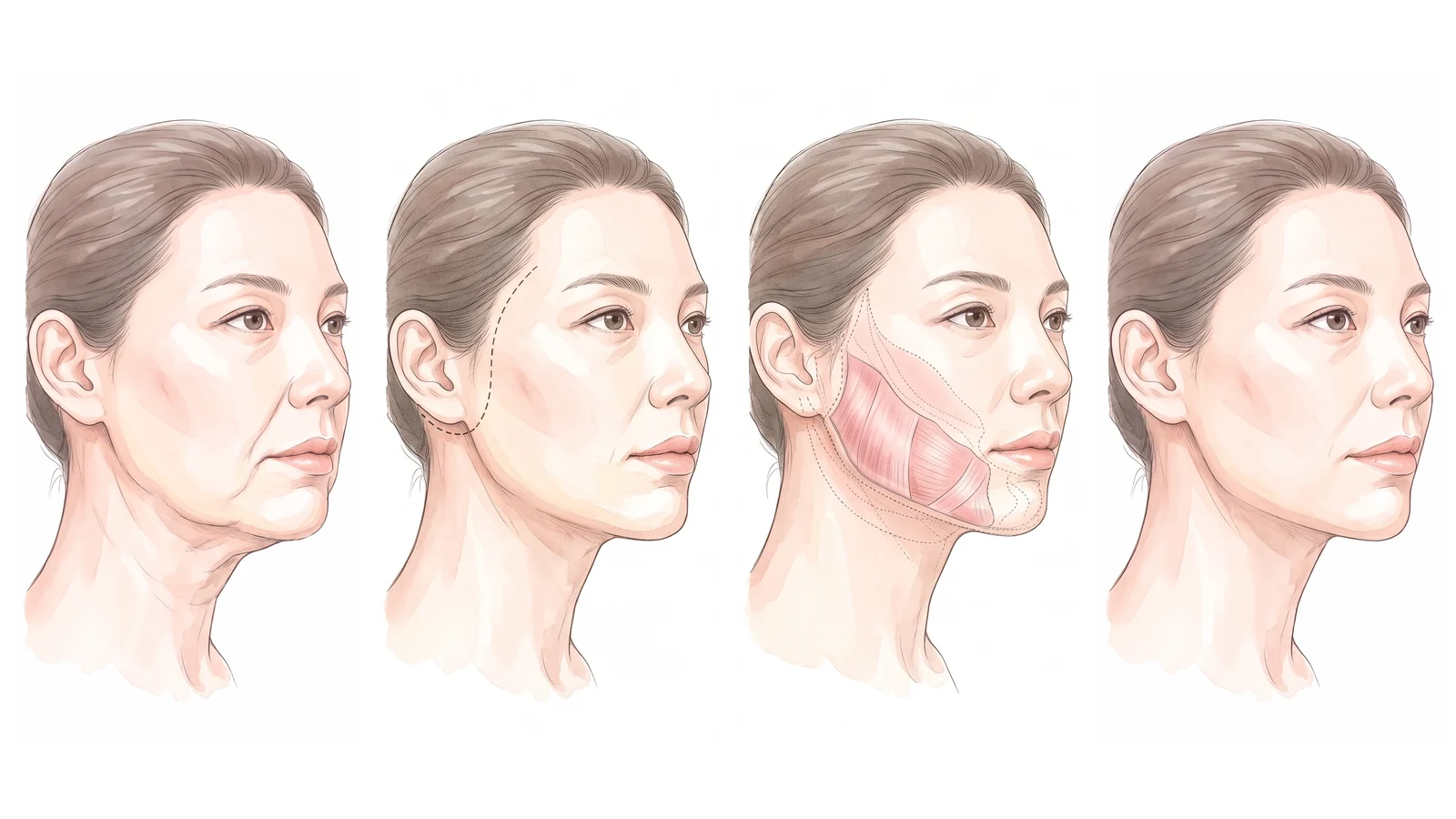
How the SMAS layer is lifted in a full facelift
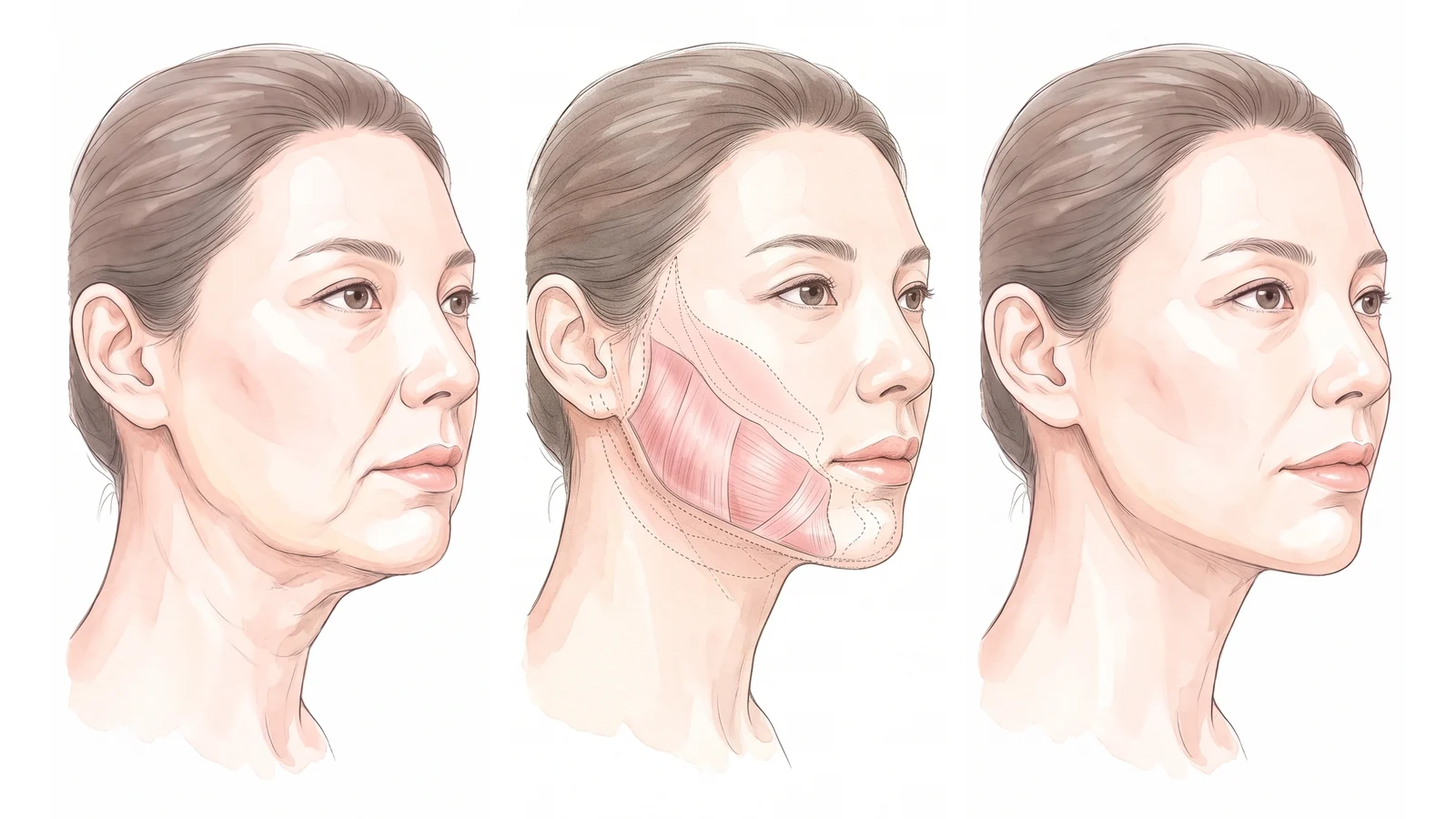
The SMAS is a sheet of connective tissue that joins the facial muscles to the skin above them. It runs from the temple across the cheek and continues into the platysma, the thin muscle of the neck. Because the skin is attached to this sheet, lifting the SMAS carries the overlying skin and fat with it. A lift that tightens skin alone puts the strain on the incision and the skin surface, and that tension can show as a stretched look and widened scars.
ENTER Plastic Surgery describes its approach as a multi-vector SMAS facelift. Each zone of the face, from the cheekbone and cheek to the jaw and upper neck, has descended by a different amount and in a slightly different direction, so the direction and amount of lift are planned for each area and for each patient. The SMAS is then fixed in its new position with sutures, and the skin is laid over it without tension.
The incision line follows the natural fold in front of the ear, passes behind the ear and continues inside the hairline, so the resulting scar sits where the ear and hair help to conceal it. A 2025 meta-analysis of 21 studies and 2,896 patients reported satisfaction of 87.8% after SMAS facelifts, with an overall complication rate of 10.3% (Khoury, 2025); those figures describe published series and do not predict an individual result.
Vector planning
At consultationDr. Jang Jin-woo assesses how far the cheek, jawline and neck have descended and how the facial bones are balanced, then plans the direction and amount of lift for each zone.
Incision around the ear
Under general anesthesia managed by an anesthesiologist, the incision is made along the fold in front of the ear, behind the ear and inside the hairline, and the skin is raised off the SMAS.
SMAS lifted along each vector
The SMAS is moved upward and back along the planned directions and secured with sutures, so the deeper layer holds the lift and the skin can lie flat without being stretched.
Skin trimmed and closed
3–5 hours in totalExcess skin is trimmed and the incisions are closed. The outer stitches are removed after about seven to ten days.
Facelift surgery options at ENTER Plastic Surgery
| Point of comparison | Full SMAS facelift | SMAS mini facelift | Neck lift |
|---|---|---|---|
| Main area addressed | Midface, jowls and jawline | Lower cheeks and early jowls | Neck and the line under the jaw |
| Anesthesia | General, sedation may be added | IV sedation | IV sedation or general |
| Procedure time | 3–5 hours | About 2 hours | About 3 hours |
| Outer stitches removed | About 7–10 days | About 7–14 days | About 7–14 days |
| Earliest flight home | 10–14 days | 7–10 days | 7–10 days |
| How long it lasts (clinic guidance) | About 7–10 years | About 3–5 years | About 5–7 years |
Times and durations are the clinic's own guidance; the face keeps aging and individual results vary. Face and neck can also be lifted together in one operation.
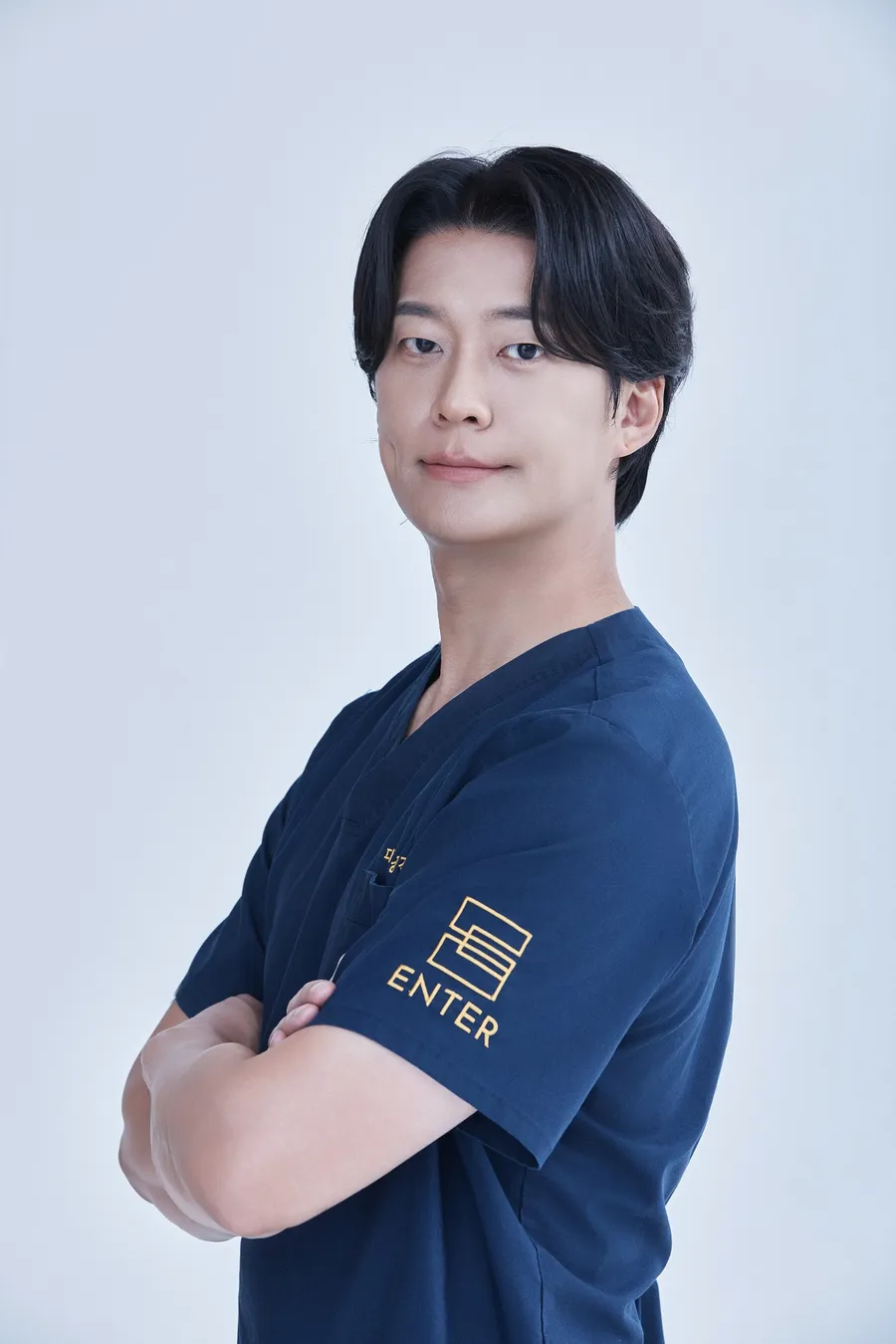
Your doctor
Chief Director · Korean board-certified plastic surgeon
“Natural, yet clearly visible change.”Eyelid and facelift surgery at ENTER is planned and performed by Dr. Jang himself.
- NowChief Director, ENTER Plastic Surgery
- TrainingPlastic surgery, Kyung Hee University Medical Center
- FormerChief Director, Jang Plastic Surgery
- FormerDirector, Secret Plastic Surgery
- MemberKSPRS · KSAPS · ISAPS · ESOPRS · ASPS
At a glance
Full facelift numbers at a glance
| Procedure time | 3–5 hours |
|---|---|
| Anesthesia | General anesthesia by an anesthesiologist; sedation may be combined |
| Recovery | Bruising and swelling 2–3 weeks; contour settles over about 3–6 months |
| Follow-up visits | 2–3 visits for dressing changes and progress checks |
| Stitches | Outer stitches removed about 7–10 days after surgery |
| Return to exercise | Generally, light activity such as walking and climbing stairs is encouraged from surgery day; strenuous exercise is avoided for about 3–4 weeks (some guidance: at least 1 month) |
| Earliest flight home | 10–14 days, once stitches are out and swelling has eased |
Prices
Full facelift cost in South Korea
A facelift quote at the clinic is built from two kinds of line. The first is the operation itself, either the full face or the face and neck lifted together in a single, longer surgery. The second is the anesthesia and sedation line, which the clinic bills separately for every surgery it performs, general-anesthesia operations included. Every amount on the cards below is listed excluding VAT (10% VAT is added at payment).
Prescription medication, dressings and any procedure added on the same day are separate questions. Ask for each of them as its own line in a written quote, and check that quote before you book a return flight for day 10 to 14.
Prices exclude VAT (10% VAT is added at payment).
Recovery
Recovery timeline after a SMAS facelift
Expect tightness, swelling and a dressing around the face and ears. Take the prescribed medication twice a day, morning and evening, as directed.
Showering lightly is fine from day one after the operation. Keep the head raised when resting and avoid bending forward for long.
Washing the face itself can start on the third day. Keep mouth opening small and food soft for four weeks so the incisions are not pulled.
The outer stitches are removed at about seven to ten days, and makeup can be worn from the day after removal.
With the stitches out and swelling easing, this is the window the clinic gives for flying home. Bruising and swelling fade over two to three weeks.
Do not rub or massage the operated areas until the end of the third week, even though the stitches are already out.
Hair coloring and perms can resume. Sensation in the cheeks and around the ears returns gradually.
The jawline and cheek contour keep settling over about three to six months, so the final shape is judged at the end of that period.
Safety
Risks and complications of a full facelift
A facelift is a long operation on a part of the body rich in blood vessels and nerves. Swelling that grows quickly on one side, severe or rising pain, or a change in facial movement are reasons to contact the clinic straight away.
- Hematoma, a collection of blood under the lifted skin, which can need prompt drainage.
- Facial nerve injury causing weakness of facial movement, which can recover over weeks to months or, rarely, last.
- Numbness of the cheeks and earlobes while sensory nerves recover.
- Poor healing or skin loss along the incision edges, a risk that is higher in people who smoke.
- Widened or raised scars, a shift in the hairline, or thinning hair along the incision.
- Asymmetry, seroma (fluid collection), infection, or revision surgery to correct the result.
Published reviews give a sense of scale. Across 15,404 facelift patients, motor nerve injury was reported in 0.66% and sensory nerve injury in 0.39%, with permanent injury at about 0.05% (Gandra, 2025). A review of 59 studies found hematoma to be the most common complication, making up about one third of all complications reported (Fang, 2025). Comparing SMAS techniques across 183 studies, rates of temporary nerve injury, hematoma and skin necrosis differed between methods, while permanent nerve injury did not (Jacono, 2019).
Evidence
Research behind this page
- The Deep Plane versus SMAS Facelift: A Systematic Review and Meta-AnalysisAesthetic Plastic Surgery · 2025 · Khoury S et al. · doi:10.1007/s00266-025-05118-x
Meta-analysis of 21 studies and 2,896 patients: SMAS facelifts showed 87.8% satisfaction and a 10.3% overall complication rate, with durable long-term results reported.
- Facelift Surgery and Nerve Injury: A Systematic Review and Meta-AnalysisAesthetic Plastic Surgery · 2025 · Gandra G et al. · doi:10.1007/s00266-025-04932-7
Meta-analysis of 15,404 facelift patients: motor nerve injury 0.66%, sensory nerve injury 0.39%, permanent injury around 0.05%; rare but serious.
- A Systematic Review of Rhytidectomy Complications and Prevention MethodsAnnals of Plastic Surgery · 2025 · Fang A · doi:10.1097/sap.0000000000004272
Review of 59 studies: facelift complications are uncommon, hematoma accounts for about one third of them, and reports of poor scarring and nerve palsy have risen.
- A Meta-Analysis of Complication Rates Among Different SMAS Facelift TechniquesAesthetic Surgery Journal · 2019 · Jacono A et al. · doi:10.1093/asj/sjz045
Meta-analysis of 183 studies: SMAS techniques differed in temporary nerve injury, hematoma, seroma, necrosis and infection, but not in permanent nerve injury.
FAQ
SMAS facelift FAQ
When will I look presentable again after a full facelift?
Plan on two to three weeks. Bruising and swelling fade over that period, and makeup can be worn from the day after the outer stitches come out at about seven to ten days. The contour keeps refining for three to six months. Swelling that grows fast on one side needs a call to the clinic.
How long should I plan to stay in Seoul for a SMAS facelift?
The clinic's guidance is 10 to 14 days. The outer stitches are removed at about seven to ten days, and there are two to three visits for dressings and checks in total. Flying home once the stitches are out and swelling has eased keeps the long flight away from the first, most swollen week.
Which doctor operates during a SMAS facelift?
Dr. Jang Jin-woo, a Korean board-certified plastic surgeon, performs the facelift at ENTER Plastic Surgery. Training took place at Kyung Hee University Medical Center, and memberships include the International Society of Aesthetic Plastic Surgery (ISAPS) and the American Society of Plastic Surgeons (ASPS). An anesthesiologist manages the general anesthesia.
Is VAT added to the SMAS facelift price?
Yes. Facelift prices are listed before Korea's 10% VAT, which is added when you pay. The anesthesia and sedation line (spelled anaesthesia in the UK) is a separate charge of ₩300,000 + VAT for every surgery, so add it to the surgery fee when you compare quotes.
Can I arrange a facelift consultation before flying to Korea?
Yes. Send the form on this page or message us on WhatsApp, and we will get back to you as soon as possible. English-speaking staff are available at the clinic. Including your possible travel dates helps fit the surgery, the stitch removal and the 10 to 14 day stay into one plan.
What are the deposit and cancellation terms for facelift surgery?
These terms are set for each booking, so ask for them in writing before paying anything. Read them together with your flights: moving the surgery date also moves the stitch removal and the earliest day you can travel home, and a facelift stay runs 10 to 14 days.
How is a SMAS facelift different from HIFU or a thread lift?
A SMAS facelift is surgery: the layer is lifted and fixed by hand through an incision, and loose skin is removed. HIFU devices heat tissue at SMAS depth without an incision, and a thread lift supports tissue with absorbable threads. Both non-surgical options heal faster, and neither removes excess skin.
Where do the facelift incisions sit?
The incision runs along the natural fold in front of the ear, curves behind the ear and continues inside the hairline. It does leave a scar, placed where the ear and hair help to conceal it. How visible it becomes depends on your skin and healing, and it fades gradually over months.
How long does a full facelift last?
The clinic's guidance is about seven to ten years. The lifted SMAS stays in its new position, but skin, fat and bone keep aging, so the face continues to change from its new starting point. Sun protection, stable weight and not smoking help the result age more slowly.
Can the neck be lifted in the same operation?
Yes. The face and neck lift treats the lower face and the neck in one longer surgery and is priced at ₩13,000,000 + VAT. It suits sagging that continues below the jawline into neck bands or loose neck skin. The anesthesia and sedation line is added to it as well.
Will I be asleep during a full facelift?
Yes. Because the operation takes three to five hours, it is done under general anesthesia, managed by an anesthesiologist, and sedation may be combined depending on your condition. You will receive fasting and medication instructions before the day, including which regular medicines to pause.
Is there a right age for a SMAS facelift?
There is no fixed age. The amount of sagging, skin elasticity and general health decide, not the number of years. People in their forties with marked jowls can be candidates, while someone older with mild laxity may still be offered non-surgical lifting first. Men are assessed the same way.
Google reviews
Reviews on Google Maps
Great experience! Dr. is very sweet and kind. He listened to what I wanted to fix and correct. He explained everything very well. Wasn’t pushy and didn’t try to sell anything extra. This isn’t a clinic that comes out on instagram, which I…
 Jennifer LyuA month ago
I came to Enter Plastic Surgery on a friend’s recommendation for under-eye fat repositioning. I was pretty nervous going in, but the doctor took the time to explain what would work for my under-eyes, what the procedure involved, and what…
 Michael2 months ago
The staff are incredibly friendly, and the consultation was very thorough. I was very worried since it was my first procedure, but the director explained the aftercare in detail, so I felt completely confident trusting them!!
 ROOHEUI SHIN (RHS)2 months ago · Translated by Google