

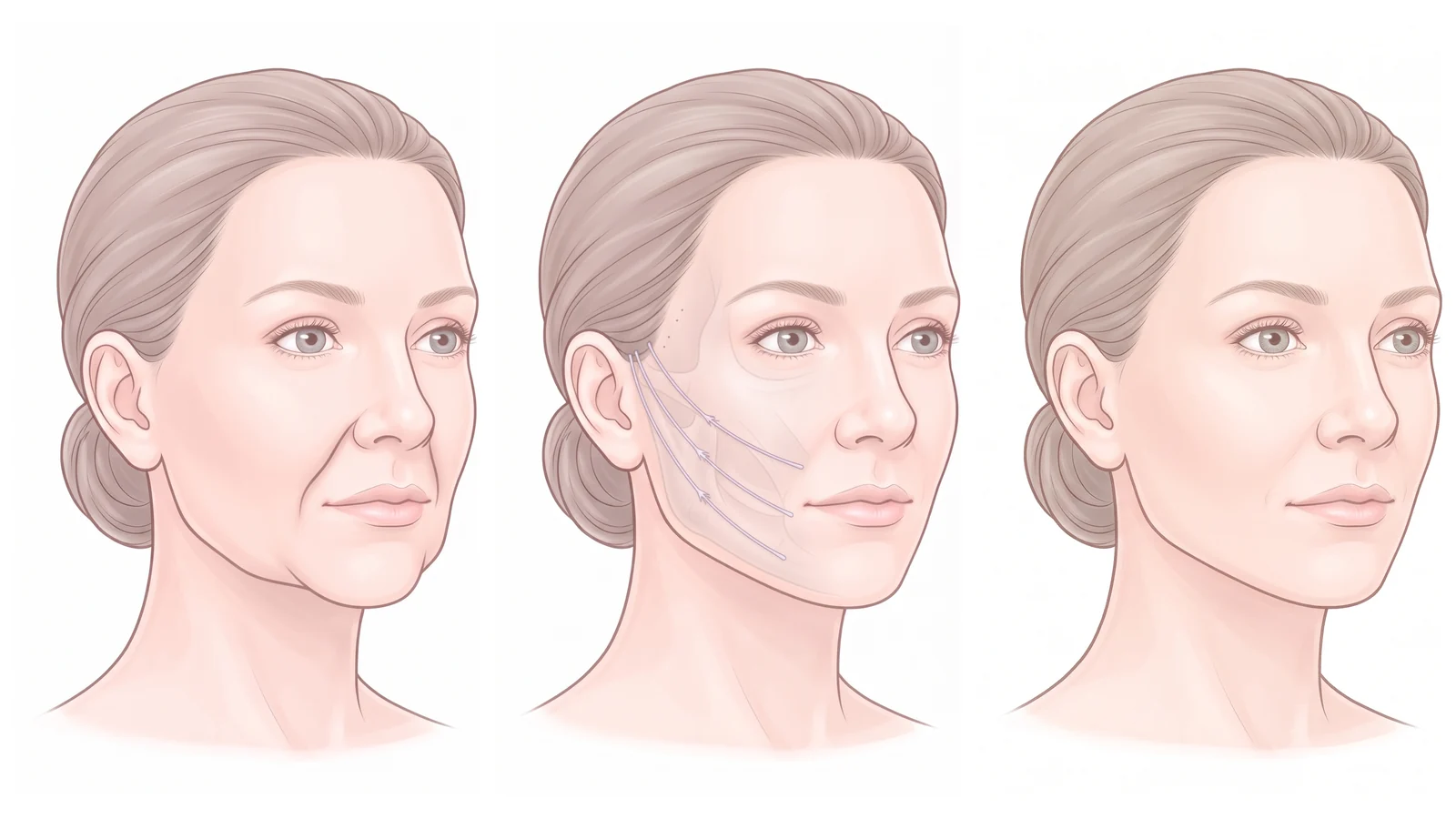
A thread lift places barbed, absorbable MINT threads (Hans Biomed) under the skin through small needle entry points, so the barbs can hold sagging cheek or jaw tissue higher while collagen forms around them. For a thread lift in Korea, ENTER Plastic Surgery in Seoul works under local anesthesia in 30–60 minutes, and the clinic's guidance is a flight home 2–3 days later.
Is it for you?
Who a thread lift in Seoul suits
Threads give mechanical support. The barbs catch the soft tissue under the skin and the thread is anchored higher up, so the effect is a repositioning of tissue that has started to slide, seen along the jawline, the lower cheek and the line from nose to mouth. That suits a face with early to moderate sagging and skin that still has some thickness to hold the threads.
Threads cannot remove excess skin or fat, and they dissolve over time. When the skin hangs in folds, or the neck is heavy, the support a thread can offer is too limited, and surgical lifting is the conversation to have. People who scar easily or have an active skin problem in the area also need a different plan.
Usually a good fit
- Early to moderate sagging of the cheeks or jawline
- Softening jowls with skin that is not too thin
- Wanting a lift without an incision or general anesthesia
- Able to stay in Seoul for 2–3 days after treatment
- Comfortable with support that lasts 6–12 months
We may suggest waiting
- Heavy skin folds or a loose neck that needs surgery
- Very thin skin where threads may show through
- Active infection, acne flare or wound in the area
- Pregnancy or breastfeeding
- A bleeding disorder or blood thinners that cannot be paused safely
Before & after
Thread lift before and after
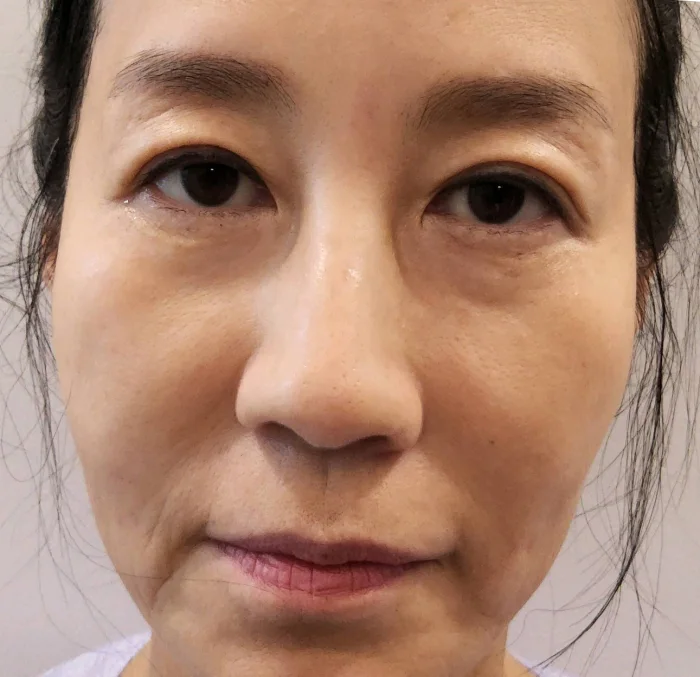 BEFORE
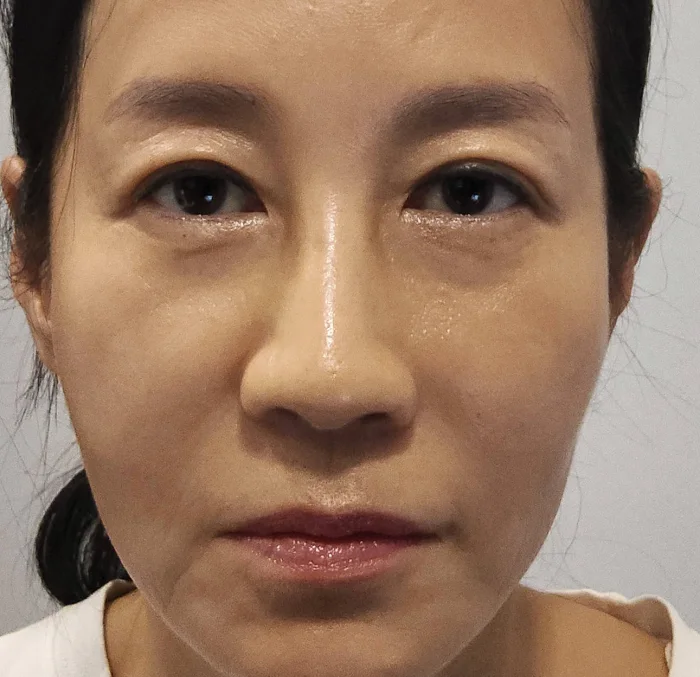 AFTER
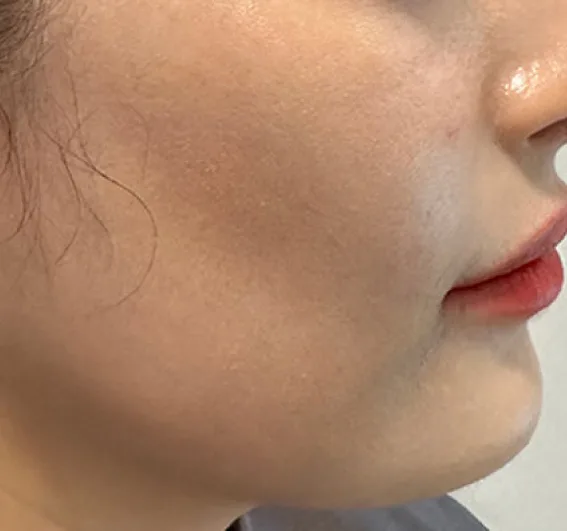 BEFORE
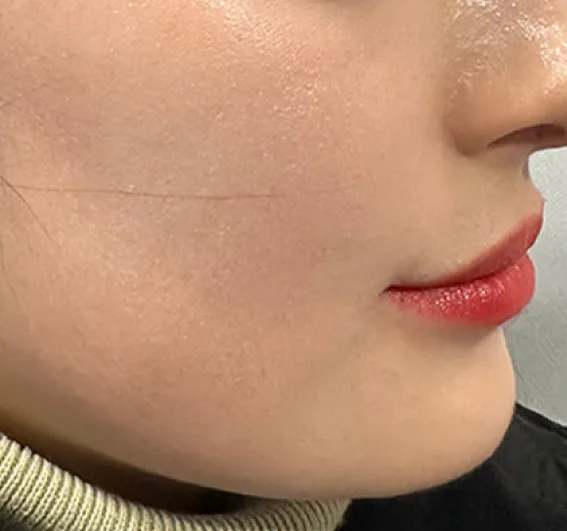 AFTER
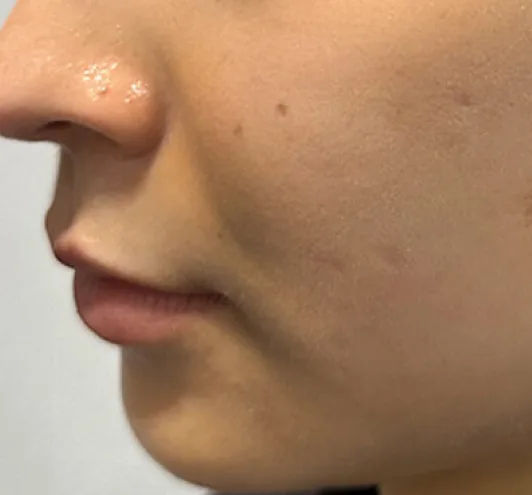 BEFORE
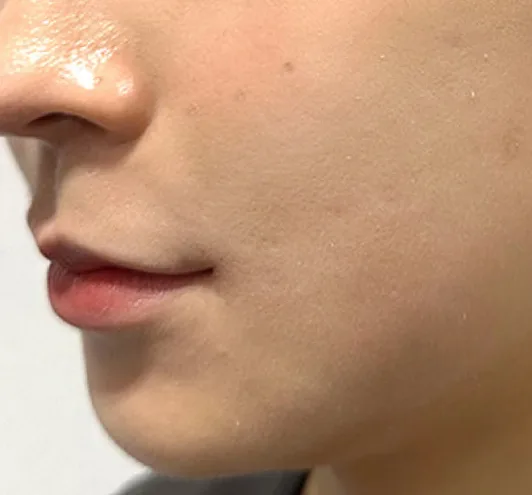 AFTER
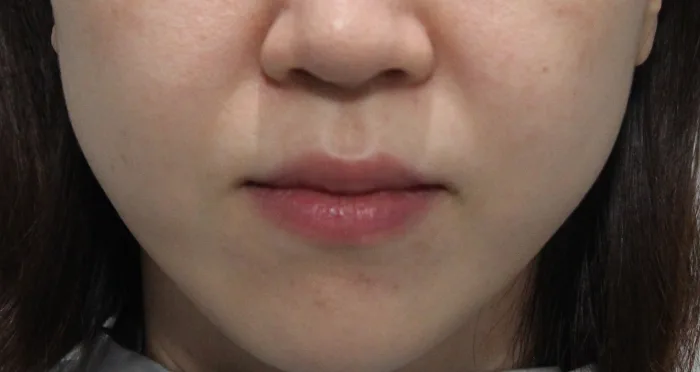 BEFORE
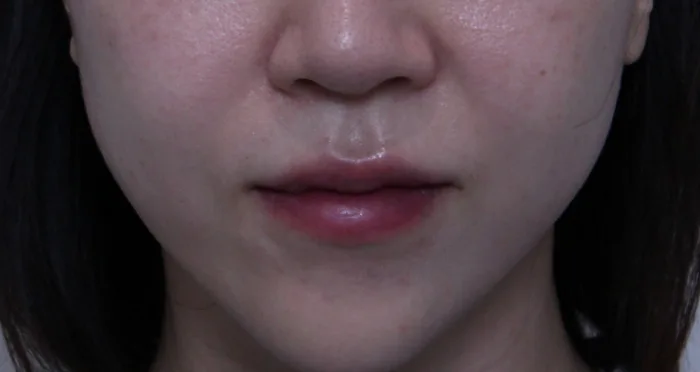 AFTER
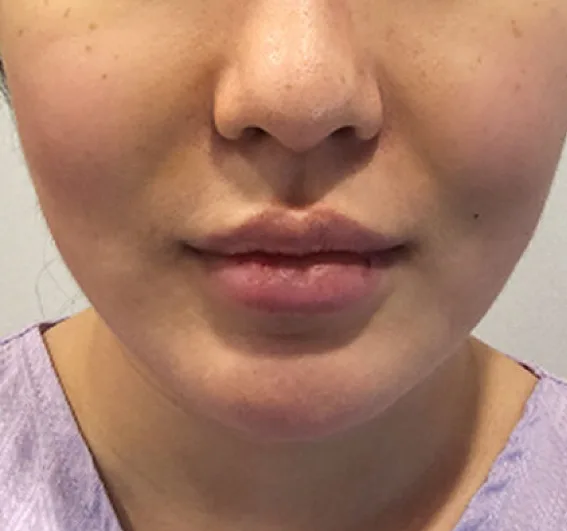 BEFORE
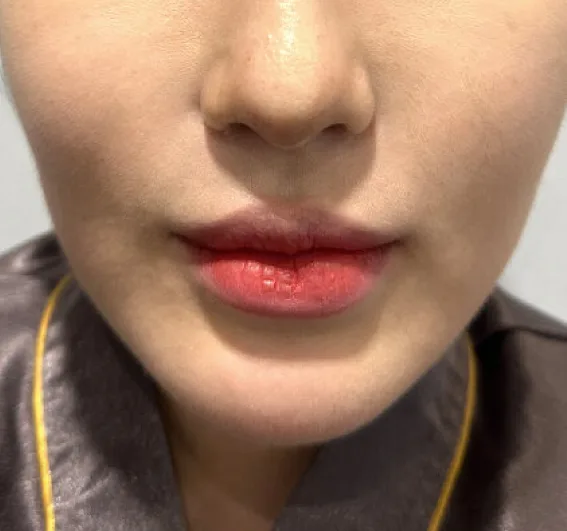 AFTER
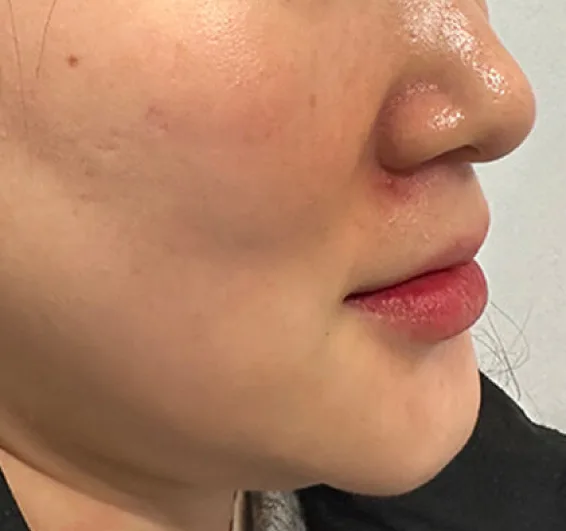 BEFORE
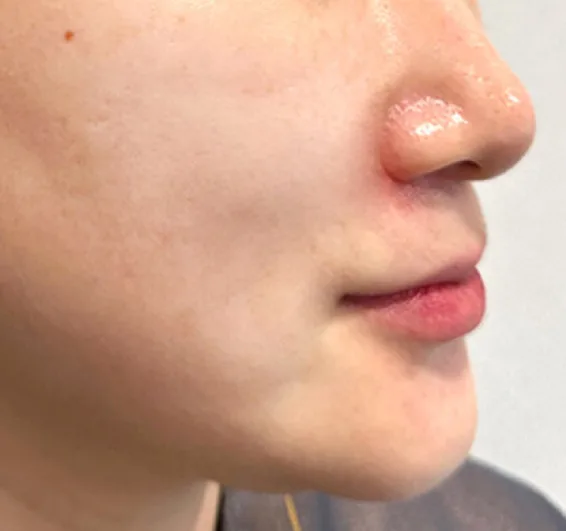 AFTER
How it works
How MINT threads hold tissue in place
Each thread carries small barbs, also called cogs, along its length. A fine needle or blunt cannula carries the thread through the fatty layer under the skin along a planned vector, the barbs open into the tissue, and the tissue is eased upward along that line. Because the entry points are tiny, no incision is made and nothing needs stitching. The thread is absorbable: over the following months it breaks down, and the body forms collagen along its path.
ENTER Plastic Surgery lists MINT threads by area. MINT Easy is used for face lifting, MINT Petit for the nasolabial line and the forehead, and MINT Fine under the chin. Separate volume threads are placed without lifting, to soften a groove under the eye, along the nasolabial line or across the mid-cheek. The clinic holds a MINT Lift certificate of genuine products issued in November 2025.
Planning areas and vectors
The thread count depends on how many vectors the face needs, and both sides are planned together so the pull is even. A jawline plan uses more threads than a single fold, and the forehead is priced as one custom session because the thread pattern is set for each brow and forehead shape.
What the evidence says about threads
The research is on barbed polydioxanone (PDO) threads in general, so it is background for the technique and not evidence about MINT itself. In 38 people treated with PDO cog threads, satisfaction was high, and tying threads from the same entry point together seemed to help stop them moving (Unal, 2019); that study had no control group and short follow-up. For the nasolabial fold, adding botulinum toxin to PDO threads improved fold depth more at three and six months than threads alone (Shinde, 2026).
Vector planning
At consultationThe face is assessed sitting up, the direction of lift is drawn on the skin, and the thread type and count are chosen for each area.
Numbing the entry points
Local anesthetic is injected at each entry point and along the path the thread will follow, so the area is numb before insertion.
Threads placed and lifted
30–60 minutesEach thread is passed under the skin, the barbs engage, and the tissue is lifted and checked for symmetry from both sides.
Trim and aftercare
Same dayThread ends are trimmed below the skin, the entry points are cleaned, and you leave with prescribed medication and aftercare instructions.
MINT thread lift, Onda and SMAS mini facelift at ENTER Plastic Surgery
| Point of comparison | MINT thread lift | Onda | SMAS mini facelift |
|---|---|---|---|
| How it works | Barbed threads lift soft tissue | Microwave heat in the fat layer | Surgery tightens the SMAS layer |
| Anesthesia | Local anesthesia | None used | IV sedation |
| Incision | Needle entry points only | None | Skin incision |
| Stitches | None; threads dissolve | None | Removed at 7–14 days |
| Flight home (clinic guidance) | 2–3 days after | Same day | 7–10 days, after stitch removal |
| How long it lasts (clinic guidance) | 6–12 months | 6–12 months | 3–5 years |
Durations are the clinic's own guidance; aging continues and individual results vary.

Your doctor
Chief Director · Korean board-certified plastic surgeon
“Natural, yet clearly visible change.”Eyelid and facelift surgery at ENTER is planned and performed by Dr. Jang himself.
- NowChief Director, ENTER Plastic Surgery
- TrainingPlastic surgery, Kyung Hee University Medical Center
- FormerChief Director, Jang Plastic Surgery
- FormerDirector, Secret Plastic Surgery
- MemberKSPRS · KSAPS · ISAPS · ESOPRS · ASPS
At a glance
Thread lift at ENTER Plastic Surgery: key facts
| Procedure time | 30–60 minutes |
|---|---|
| Anesthesia | Local anesthesia |
| Downtime | Swelling and bruising 3–7 days; tightness 2–4 weeks |
| Recommended sessions | 1 session; repeat after 6–12 months |
| How long results last | 6–12 months |
| Return to exercise | Generally, per published guidance, light exercise resumes the next day, and saunas and swimming pools are avoided for about 1 week |
| Earliest flight home | 2–3 days after treatment |
Prices
MINT thread lift price in Seoul
Four of the five lines on this list are charged per thread, so the total for a face depends on the thread type and how many are placed. The forehead is the exception: it is one custom session at a single price. Combining areas, for example the jawline with the nasolabial line, adds the threads for each area together.
All amounts exclude VAT, and 10% VAT is added at payment. Local anesthesia is part of the treatment, with no sedation fee. Because thread count drives the cost, ask for the count per area to be written into your quote before you book flights.
Prices exclude VAT (10% VAT is added at payment).
Recovery
The first four weeks after a thread lift
You can wash your face from the same day, but do not rub it hard in a downward direction. Take the prescribed medication twice a day, morning and evening.
Swelling and bruising settle over three to seven days. Small dimples or bunching at the entry points fill in naturally within one to two weeks.
A sense of tightness, especially when you talk or chew, is part of healing and fades over two to four weeks.
Avoid opening your mouth wide for four weeks so the threads are not pulled loose. Call the clinic straight away about spreading redness, heat, pus or a thread end you can feel through the skin.
Safety
What can go wrong with a thread lift
Threads are minimally invasive, but they are a medical procedure with known complications. A review of 42 studies on non-surgical facial treatments recorded adverse events in about 20% of absorbable thread lifts, with pain and bruising the ones reported most (Cruz, 2025).
- Pain, swelling and bruising along the thread paths.
- Dimpling, puckering or uneven contour, which can persist if the skin does not settle.
- Asymmetry between the two sides.
- A thread end that can be felt, seen or works its way out through the skin.
- Infection at an entry point or along a thread.
- Thread migration, or the lift relaxing earlier than expected.
A meta-analysis found that non-absorbable threads and older age were linked with a higher complication rate, and its authors advise telling patients that the effect may not last long (Niu, 2021).
Evidence
Research behind this page
- A Meta-Analysis and Systematic Review of the Incidences of Complications Following Facial Thread-LiftingAesthetic Plastic Surgery · 2021 · Niu Z et al. · doi:10.1007/s00266-021-02256-w
Meta-analysis of complications after facial thread lifting: non-absorbable threads and older age were linked with more complications, and patients should be told the effect may not last long.
- Adverse Events in Nonsurgical Facial Aesthetic Procedures: A Systematic Review and Meta‐AnalysisOral Diseases · 2025 · Cruz V et al. · doi:10.1111/odi.70109
Meta-analysis of 42 studies on non-surgical facial treatments: adverse events were reported in about 20% of absorbable thread lifts, mostly pain and bruising; reporting needs standardizing.
- Experiences of barbed polydioxanone (PDO) cog thread for facial rejuvenation and our technique to prevent thread migrationJournal of Dermatological Treatment · 2019 · Unal M et al. · doi:10.1080/09546634.2019.1640347
Uncontrolled, short-term series of 38 people with PDO cog threads: high satisfaction, and tying threads from one entry point appeared to limit migration. Not specific to MINT.
- Correction of Nasolabial Folds Using Polydioxanone Cog Threads Combined With Botulinum Toxin Type A: A Prospective Comparative Clinical StudyCureus · 2026 · Shinde S et al. · doi:10.7759/cureus.101158
Prospective comparison for nasolabial folds: PDO cog threads plus botulinum toxin improved fold depth and satisfaction more at 3 and 6 months than threads alone, with similar mild side effects.
FAQ
Thread lift in Korea: questions before booking
What is a MINT thread lift?
A MINT thread lift uses MINT brand absorbable threads with small barbs, placed under the skin to lift and support sagging tissue. ENTER Plastic Surgery lists three MINT types by area: MINT Easy for the face, MINT Petit for the nasolabial line and forehead, and MINT Fine under the chin.
Who performs the thread lift at ENTER Plastic Surgery?
The thread lift is a non-surgical treatment at ENTER Plastic Surgery, a clinic led by Dr. Jang Jin-woo, a Korean board-certified plastic surgeon. This page does not assign each session to a named doctor; include the question in your enquiry and the clinic will tell you who plans and places the threads.
How many days should I plan in Korea for a thread lift?
Plan at least two to three days after the treatment day. The clinic's guidance is that you can fly home 2–3 days later, once early swelling has eased. Bruising can take up to a week to fade, so a slightly longer stay helps if you have photos or events soon after.
Do thread lift prices in Seoul include VAT?
No. Every line excludes VAT, and 10% VAT is added when you pay. A MINT Easy face thread is ₩120,000 + VAT per thread, and the forehead session is ₩1,500,000 + VAT. Local anesthesia is included, with no separate sedation fee.
How do I contact the clinic about a thread lift from abroad?
Send the form on this page or message us on WhatsApp with the areas that concern you, a recent front and side photo of your face if you are comfortable sharing one, and your travel dates. We will get back to you as soon as possible. English-speaking staff are available at the clinic.
Do I pay a deposit to reserve a thread lift?
Deposit and cancellation terms are agreed for each booking and are not listed on this page. Get them in writing before any payment, and ask how a change of date is handled in case your flights move.
Do the threads stay in my face?
No. MINT threads are absorbable, so they break down over the following months and nothing has to be removed. Collagen forms along the thread paths as they dissolve, which is part of why the clinic places the effect at about 6–12 months.
Is a thread lift an alternative to a facelift?
For early sagging it can be, with a shorter and smaller effect. Threads reposition soft tissue for months; a SMAS mini facelift tightens the deeper layer and removes skin, and the clinic's guidance for it is 3–5 years. Heavy jowls or loose neck skin are reasons to discuss surgery.
Can a thread lift be combined with Onda on the same visit?
Yes. Onda heats the fat layer under the skin while threads give mechanical support, and the two are planned together at the clinic. The order and spacing are set for your face, so say in your enquiry that you are interested in both.
Is a thread lift done under local anesthesia (anaesthesia in UK spelling)?
Yes. Local anesthetic is injected at the entry points and along the thread paths, and no IV sedation is used for a thread lift at the clinic. You stay awake, can talk during the treatment, and can leave once the entry points have been checked.
What result is realistic from a thread lift?
A modest lift along the jawline or cheek, which looks most settled once swelling and tightness have faded after two to four weeks. The clinic puts the effect at 6–12 months, and research reminds patients that the lift may relax sooner. Excess skin is not removed.
Google reviews
Reviews on Google Maps
Great experience! Dr. is very sweet and kind. He listened to what I wanted to fix and correct. He explained everything very well. Wasn’t pushy and didn’t try to sell anything extra. This isn’t a clinic that comes out on instagram, which I…
 Jennifer LyuA month ago
I came to Enter Plastic Surgery on a friend’s recommendation for under-eye fat repositioning. I was pretty nervous going in, but the doctor took the time to explain what would work for my under-eyes, what the procedure involved, and what…
 Michael2 months ago
The staff are incredibly friendly, and the consultation was very thorough. I was very worried since it was my first procedure, but the director explained the aftercare in detail, so I felt completely confident trusting them!!
 ROOHEUI SHIN (RHS)2 months ago · Translated by Google